

SEO Keyword Research Tools for Low Competition Keywords: How Smart Websites Win Quietly

SEO Keyword Research Tools for Low Competition Keywords: How Smart Websites Win Quietly
A few years ago, when I launched one of my earliest niche websites, I made a classic mistake. I chased big keywords. The kind that looked impressive in tools, showed massive search volumes, and made me feel like success was just one ranking away. Months passed, articles piled up, but traffic barely moved. It wasn’t until I shifted my focus to low competition keywords that everything changed.
Low competition keywords don’t scream for attention. They whisper. But those whispers can build steady traffic, loyal readers, and long-term growth if you know how to find them. In this guide, we’ll explore the most reliable SEO keyword research tools for uncovering low competition keywords, how professionals actually use them, and how you can apply the same methods with confidence.
This article focuses entirely on keyword research tools and practical usage, keeping the conversation grounded, realistic, and useful for real-world websites.
Why Low Competition Keywords Matter More Than Ever
Search engines have become smarter, but competition has also grown fiercer. Big brands dominate high-volume terms with massive budgets, authority backlinks, and years of content history. For newer or smaller websites, competing head-on is often unrealistic.
Low competition keywords solve this problem by offering clearer intent, fewer competing pages, and a realistic path to ranking. These keywords usually come in the form of longer phrases, questions, or highly specific needs. When users search them, they are often closer to taking action, which makes this traffic more valuable.
The challenge isn’t understanding their value. The real challenge is finding them accurately. That’s where the right tools make all the difference.
What Makes a Keyword Truly Low Competition
Before diving into tools, it’s important to understand what “low competition” actually means in practice. It’s not just about a low difficulty score. A keyword becomes low competition when search results are dominated by weak or outdated content, forums, low-authority blogs, or pages that don’t fully satisfy user intent.
Experienced SEO professionals look beyond numbers. They examine the search results, content depth, relevance, and how well the ranking pages actually answer the query. The best tools help you do this faster and with more clarity.
Google Keyword Planner: A Free Starting Point with Hidden Value
Many beginners overlook Google Keyword Planner because it was designed for advertisers, not content creators. But when used carefully, it can reveal valuable low competition ideas directly from Google’s own data.
By entering a broad topic and filtering for lower competition terms, you can uncover phrases that advertisers haven’t heavily targeted yet. These often translate well into organic opportunities. When paired with manual SERP checks, this tool becomes far more powerful than it appears on the surface.
Professionals often use Keyword Planner as a baseline and then validate ideas using other tools before committing to content.
Ahrefs: Deep Insights into Real Ranking Difficulty
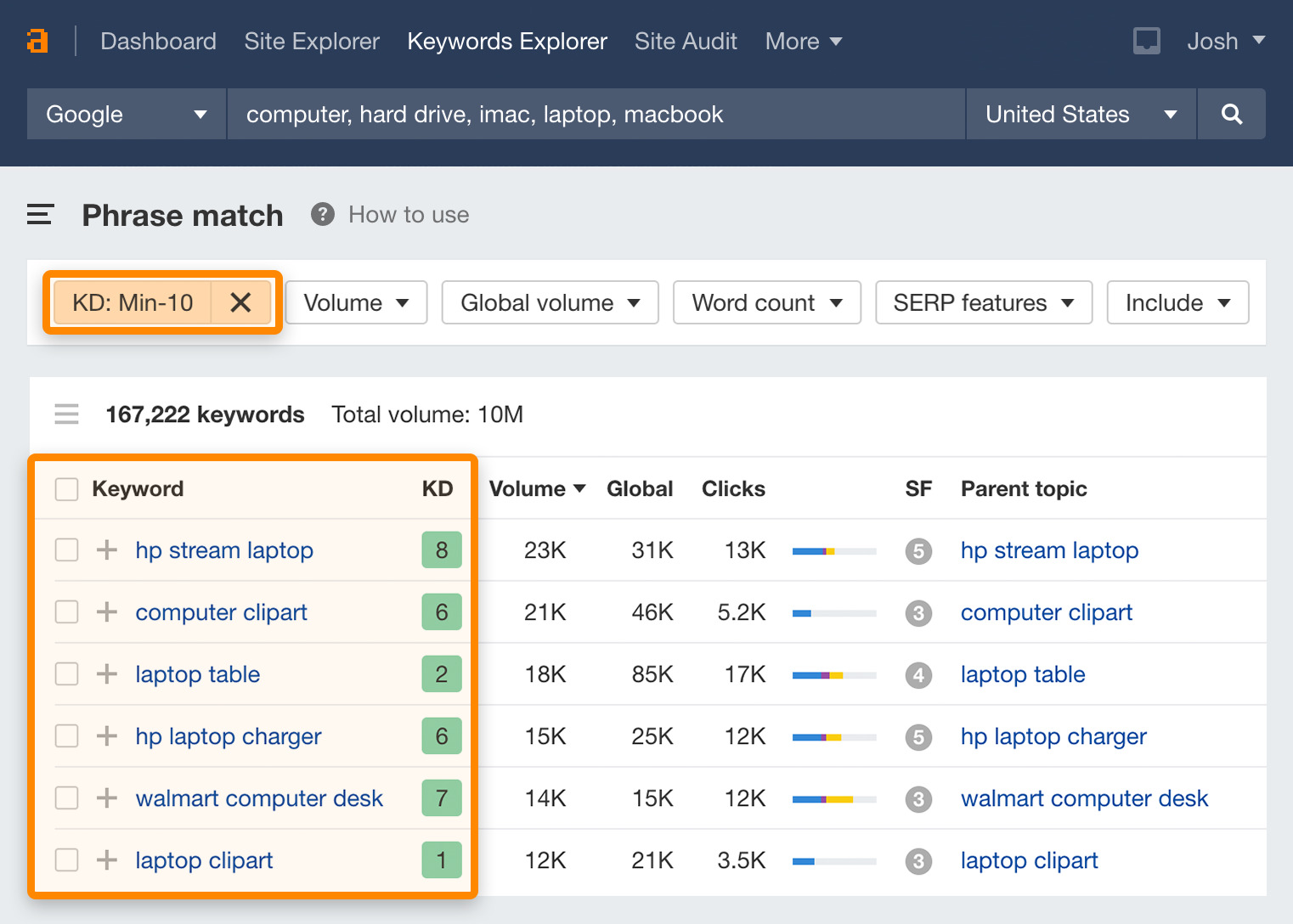
Ahrefs is widely respected for its accuracy and depth. What makes it especially useful for low competition keyword research is its Keyword Difficulty metric combined with SERP analysis.
Instead of relying solely on numbers, Ahrefs shows backlink profiles of ranking pages, estimated traffic, and content strength. This allows you to identify keywords where top results rank with minimal authority, which is often a strong indicator of opportunity.
Industry studies published on platforms like Search Engine Journal frequently reference Ahrefs data because of its reliability and consistency, which adds confidence when making keyword decisions.
SEMrush: Finding Gaps Others Miss
SEMrush excels at revealing keyword gaps and missed opportunities. One of its strongest features is showing keywords that competitors rank for but haven’t fully optimized.
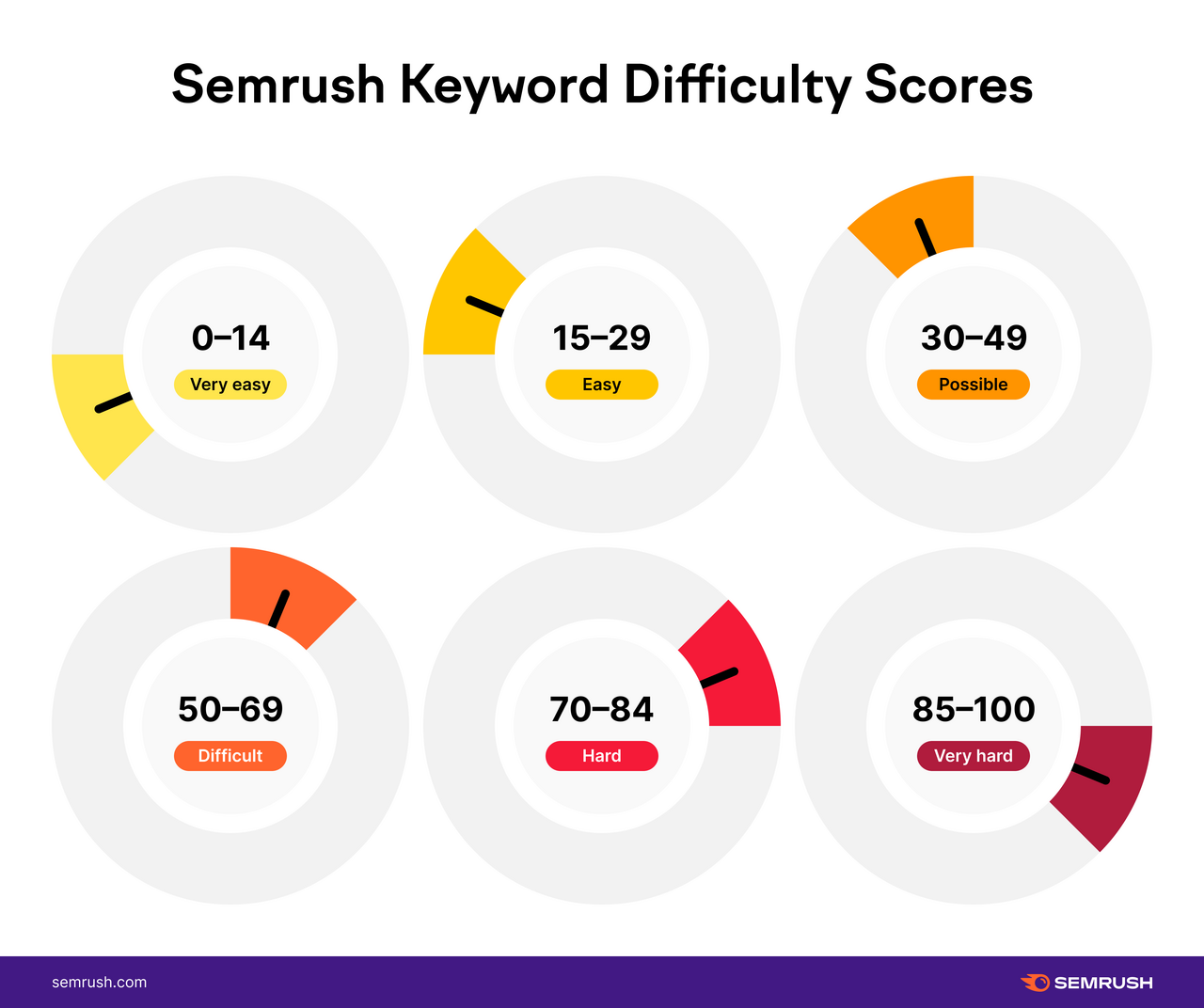
For low competition research, SEMrush allows you to filter keywords by difficulty, intent, and SERP features. This helps uncover phrases that are searched regularly but not aggressively targeted.
Many professional SEO consultants rely on SEMrush when auditing sites for growth potential, especially when trying to scale content without entering high-competition territory.
Ubersuggest: Practical Insights for Smaller Websites
Ubersuggest has grown significantly over the years. While it may not be as deep as enterprise-level platforms, it offers excellent value for finding low competition keywords, particularly for newer websites.
Ubersuggest combines keyword suggestions, SEO difficulty scores, and content ideas in a simple interface. It’s especially effective for identifying long-tail keywords and questions that users actually type into search engines.
The tool is frequently recommended in beginner SEO guides published by trusted marketing blogs, making it a solid choice for practical, everyday research.
KWFinder: Precision Over Volume
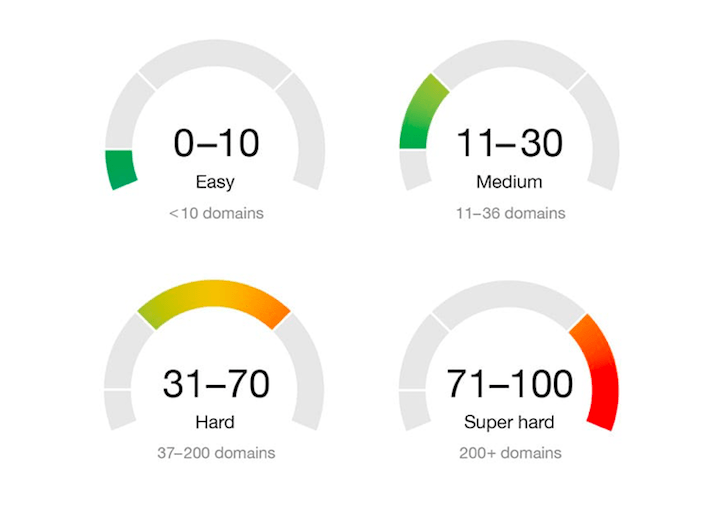
KWFinder focuses on simplicity and accuracy. Its keyword difficulty metric is easy to understand and surprisingly effective when identifying low competition opportunities.
What sets KWFinder apart is how clearly it displays SERP competition, including domain authority and backlink strength. This makes it easier to spot keywords where ranking is realistically achievable without excessive link-building.
Many content-focused bloggers prefer KWFinder because it removes unnecessary noise and keeps the focus on actionable keywords.
AnswerThePublic: Understanding Search Intent First
AnswerThePublic approaches keyword research from a different angle. Instead of starting with numbers, it starts with questions.
This tool pulls real search queries and organizes them around how, why, what, and when. These queries often have low competition because they are highly specific, yet they attract users who want clear answers.
Search intent-focused content has been repeatedly highlighted by Google Search Central as a way to better satisfy users, making AnswerThePublic especially valuable for creating useful, trustworthy pages.
Google Search Console: Your Most Honest Keyword Source
Google Search Console is often underestimated for keyword research. While it doesn’t provide traditional keyword suggestions, it reveals what your site is already appearing for.
By analyzing impressions with low clicks, you can identify keywords where you are close to ranking but haven’t fully optimized content. These are often low competition terms that require small improvements rather than entirely new pages.
Many seasoned SEO professionals rely on Search Console data because it reflects real performance, not estimates.
How Experts Combine Tools for Better Results
No single tool provides a complete picture. Professionals combine data sources, cross-check difficulty scores, and manually analyze search results before deciding which keywords to target.
A common approach involves discovering ideas through Google Keyword Planner or AnswerThePublic, validating difficulty using Ahrefs or SEMrush, refining with KWFinder, and tracking performance through Google Search Console. This layered method reduces risk and increases accuracy.
SEO case studies published by authoritative platforms like Moz consistently show that this blended approach leads to more stable rankings and sustainable growth.
Common Mistakes When Using Keyword Research Tools
One of the most frequent mistakes is blindly trusting difficulty scores. Tools estimate competition, but they don’t understand content quality or intent alignment. Another mistake is ignoring search intent and focusing only on volume.
Low competition keywords work best when content genuinely satisfies the user’s question better than existing results. Tools guide the process, but judgment completes it.
FAQs About SEO Keyword Research Tools for Low Competition Keywords
Are low competition keywords always long-tail keywords
Not always, but they often overlap. Many low competition keywords are longer phrases because fewer websites target them. However, some short keywords can also be low competition if search intent is unclear or poorly served by existing content.
Can free keyword research tools really be effective
Yes, especially when combined with manual analysis. Tools like Google Keyword Planner and Google Search Console provide real data directly from Google, which can be extremely valuable when used thoughtfully.
How many low competition keywords should one article target
Ideally, one primary keyword with a few closely related variations. Overloading a page with unrelated terms can dilute focus and reduce clarity for both users and search engines.
How often should keyword research be updated
Keyword trends change slowly, but competition evolves constantly. Reviewing keyword opportunities every few months helps identify new gaps and maintain relevance.
Do low competition keywords guarantee rankings
No tool or keyword guarantees rankings. However, low competition keywords significantly improve your chances when combined with high-quality content, clear intent, and consistent publishing.
Is keyword difficulty the same across all tools
No, each tool calculates difficulty differently based on its own data sources. This is why comparing multiple tools often provides better insight.
Should beginners use paid keyword research tools
Beginners can start with free tools and upgrade when needed. Paid tools offer deeper insights, but understanding fundamentals matters more than software.
Conclusion: Quiet Keywords, Lasting Growth
Low competition keywords don’t promise overnight success. What they offer instead is something far more valuable: momentum. When chosen carefully and supported by genuinely helpful content, these keywords allow websites to grow steadily, earn trust, and build authority over time.
The right SEO keyword research tools act like a compass. They don’t walk the path for you, but they prevent you from getting lost. By learning how to interpret their data, validate opportunities, and focus on user intent, you give your website a realistic and sustainable way forward.
Start small. Explore quietly searched questions. Validate competition honestly. Then create content that truly deserves to rank. Over time, those quiet keywords will stop whispering and begin driving consistent, meaningful traffic to your site.
.jpg)
Popular Tools
Recent Posts

.webp)


